


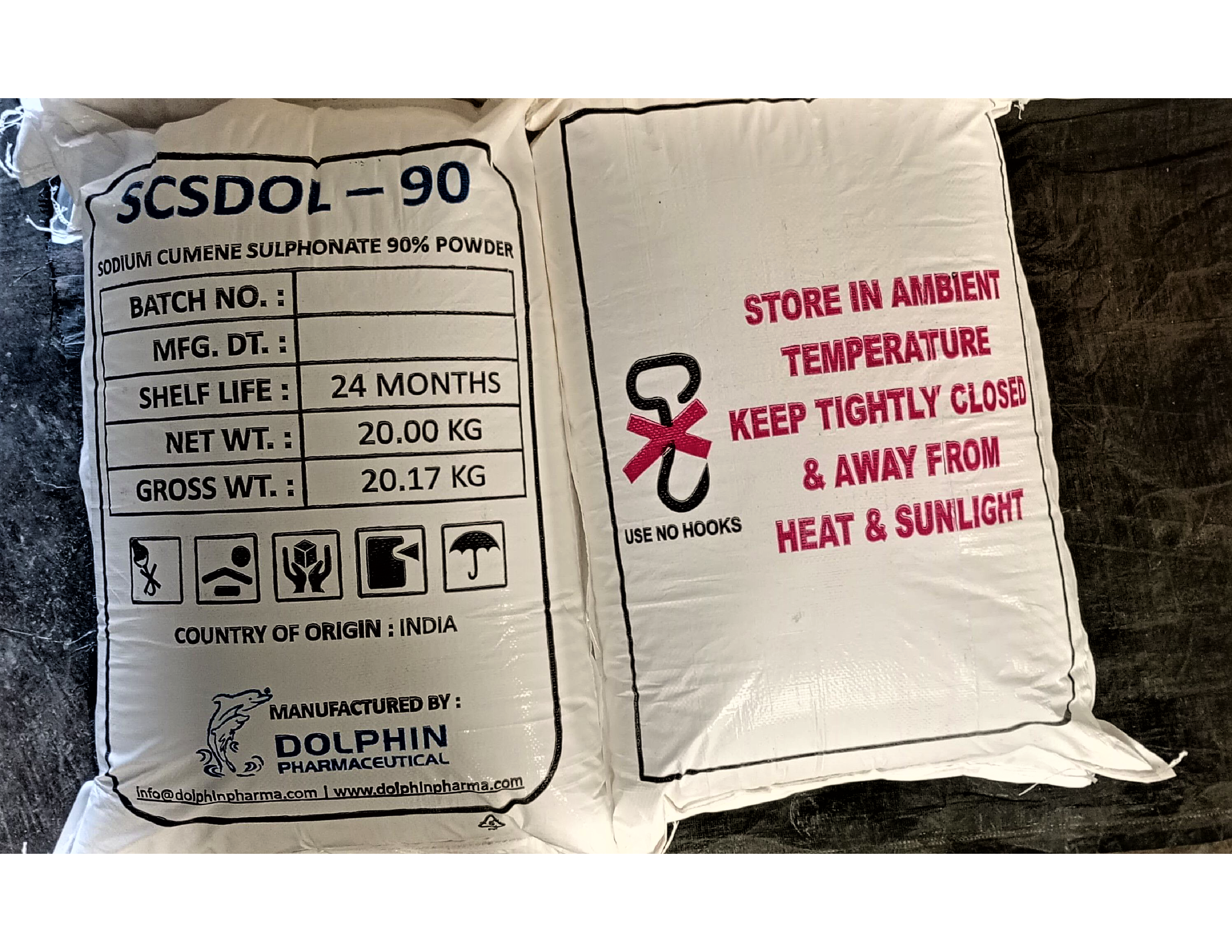
Application research guide for Sodium Cumene Sulfonate 90% used in detergent, cleaner, agrochemical, personal care, and industrial formulation systems.
Sodium Cumene Sulfonate 90% used in Detergents, Agrichemicals and Personal Care
Liquid products are made of different ingredients. These ingredients need to mix stay stable and work properly while being stored and used. In detergents, agricultural products and personal care items some ingredients don’t mix easily with water or with each other. That’s where hydrotropes and solubilizing agents come in.
Sodium Cumene Sulfonate 90% is powder form ingredient. It acts as a hydrotrope and solubilizing agent in liquid formulas. It improves miscibility with water. Keeps the final product stable. Because of this it’s used in cleaning products, agricultural formulations and personal care items.
Manufacturers want ingredients that make it easier to produce, mix and store their products. Sodium cumene sulfonate helps with solubility, product clarity and the mixing of ingredients.
Dolphin Pharmaceutical / Dolphin Chemicals manufacturing of Sodium Cumene Sulfonate 90% under the brand name SCSDOL 90% powder, based in Gujarat, India. DOLSX 90% is available for use in detergent, agrochemical and personal care formulations. This 90% active ingredient suggest that this is available in powder form.
In this blog we’ll look at the uses of sodium cumene sulfonate 90% in detergents, agrochemicals and personal care products.
What Is Sodium Cumene Sulfonate 90%?
Sodium cumene sulfonate act as a hydrotrope. A hydrotrope improves miscibility that don’t dissolve well in water to mix better. This is helpful when a formula includes ingredients with water solubility.
The "90%" means the product grade and active content as stated by the supplier. Specifications can differ between manufacturers. So companies should check the product specification, technical data sheet and certificate of analysis before using a grade.
Sodium cumene sulfonate can be used with other ingredients in liquid formulas. It can go with surfactants, solvents, fragrances, builders and other formulation components.
It’s usually a support ingredient, not the main cleaning or treatment ingredient. Its job is to help different ingredients work well together in the formula. This is useful when a product has ingredients with different solubility and compatibility.
Sodium cumene sulfonate 90% - SCSDOL 90%
Key Properties of Sodium Cumene Sulfonate 90%
Property of sodium cumene sulfonate is its ability to act as a hydrotrope.
This is helpful when a formula includes ingredients that're hard to dissolve or may separate while stored. A good hydrotrope can reduce these problems.
Sodium cumene sulfonate can also act as a solubilizing and coupling aid. In a product ingredients need to stay compatible. If they don’t mix well the product may turn separate or form deposits.
Sodium Cumene Sulfonate 90% depends on the formula like concentration, pH, temperature, surfactants, solvents and other ingredients can affect the result.
Because of this manufacturers should test the formula before using the material in large-scale production.
Sodium Cumene Sulfonate 90% in Detergent Applications
Detergent products is made by using different types of ingredients and excipients. These excipient can include surfactants, solvents, fragrances, preservatives, colors and other additives. Some of these don’t mix well with water on their own.
This is why Sodium Cumene Sulfonate 90% is useful in detergent formulas. It helps selected ingredients mix better and stay in the form.
A liquid detergent must stay stable during storage. It should not separate, form deposits or change appearance. A good hydrotrope can help formulators meet these needs.
Sodium cumene sulfonate is mostly a support ingredient. It doesn’t replace the cleaning agents. Instead it helps ingredients work together better.
This makes it useful in liquid cleaning products where solubility, mixing and stability matter.
Improving Solubility and Stability in Detergents
One issue in detergent production is getting all ingredients to mix well. A liquid detergent may have surfactants, solvents, fragrances, builders and other materials.
If these don’t mix well the product may get cloudy or separate. Some ingredients may form crystals or deposits during storage. These changes can hurt the appearance and quality.
A hydrotrope can improve how selected ingredients mix in a water-based formula. This helps with product clarity. Keeps ingredients evenly spread.
This is especially helpful when making detergents. Higher ingredient levels make formulation harder. A good hydrotrope gives formulators options when adjusting the formula.
The right amount must be found through testing. The needed level can change based on the ingredients in the product.
Role in Laundry Detergents
Laundry detergents are made to clean clothes while being easy to use and store. They must keep their properties during transport and storage.
Unlike powder detergents liquid ones must stay in a liquid form. Ingredients shouldn’t. Separate under normal storage.
A good hydrotrope can improve how ingredients mix. Sodium Cumene Sulfonate 90% used in detergent formulas may support the solubility and stability of laundry products when used at the right level.
It can also help when manufacturers work with formulas that have levels of surfactants or other hard-to-mix ingredients.
There’s no one-size-fits-all dosage. Manufacturers usually test concentrations and check clarity, viscosity, stability, cost and overall performance.
Application in Dishwashing and Household Cleaners
Hydrotropes aren’t for laundry detergents. They’re also used in liquid cleaning products.
Some ingredients required to stay miscible with water like Dishwashing liquids, surface cleaners, bathroom cleaners, glass cleaners and industrial cleaners.
For example dishwashing products may have surfactants, solvents, fragrances, preservatives and other additives. These must work together while keeping the texture and look.
A good hydrotrope can improve compatibility between selected ingredients. This makes the formula easier to create and process.In household cleaners the final product needs to stay clear and stable during storage. A good solubilizing agent can help formulators reach the needed product qualities.

Sodium Cuemne Sulfonate 90% used in detergent
Sodium Cumene Sulfonate 90% in Agrichemical Formulations
Agriculture products need careful formulation too. Products like herbicides, fungicides, insecticides and other crop protection items may have ingredients that don’t dissolve well in water.
This is where Sodium Cumene Sulfonate 90% used in formulas can help. It acts as a formulation aid. Helps with the solubility and mixing of selected ingredients.
Many agricultural products are mixed with water before being applied to crops. So how ingredients behave in water is key in product development.
A good hydrotrope can help formulators create an uniform liquid formula. It may also reduce problems from ingredient compatibility.
Sodium cumene sulfonate’s performance depends on the active ingredient and the full formula. Testing should be done before using it in production.
Improving Solubility of Agrichemical Ingredients
Solubility is important in making formulas. Some active ingredients don’t dissolve well in water. Other formula ingredients may also have water solubility.
Formulators may use solvents, surfactants, hydrotropes and other aids to handle these issues. The right mix can create a product that’s easier to mix and use.
A good solubilizing agent can also support the stability of the formula. It helps keep selected ingredients spread under required storage conditions.
When picking a formulation aid manufacturers should consider the ingredient, formula type, pH, storage temperature, dilution conditions and other additives.
Sodium Cumene Sulfonate 90% used in applications should be tested as part of the full formula. It’s important to see how it works with ingredients not just judge it alone.
Sodium Cumene Sulfonate 90% in Personal Care Products
Personal care products have ingredients. Personal care prodcuts likes shampoos, soaps, body washes and other cleansing products may have surfactants, fragrances, preservatives, conditioning agents, salts and other additives.
For personal care product for washing require surfactant to make foam and improves miscibility with other ingredient. Some ingredients don’t dissolve well in water. May affect the product’s stability.
This is where hydrotropes and solubilizing agents help. Sodium Cumene Sulfonate 90% used in care formulas may help mix and dissolve selected ingredients in water-based products.
For example some fragrance materials don’t dissolve well in water. With the formula a solubilizing agent can help mix them more evenly.
Any raw material used in care should be checked against the final product’s needs and the regulations of the target market. Manufacturers should review the technical and safety info before use.
Benefits in Shampoos and Cleansing Products
Shampoos and cleansing products not only surfactant used, but also other exipient is required for better quality. Excipients like - fragrances, conditioning agents, preservatives, colors and viscosity-control ingredients.
When different types of ingredients, different types ofchemical property, different types ofmiscibility value are combined, keeping the formula becomes a challenge. Some may not dissolve well. May affect the final product’s look.
A good hydrotrope can improve the solubility of selected ingredients. Help with mixing. This helps formulators make a stable liquid product.
Fragrance materials are one example. Some have water solubility. A suitable solubilizing agent may help them mix
Sodium Cumene Sulfonate 90% used in personal care applications can be considered when solubility and ingredient compatibility are key. Before use manufacturers should check product needs and regulations for the target market.
SCS 90% as a Hydrotrope, in Modern Formulations
Many manufacturers are creating powder products. These products have levels of active and functional ingredients. This can make the formulation process more difficult.
As the number of ingredients increases keeping them well mixed and stable becomes harder. Hydrotropes can help improve how water interacts with selected ingredients. This can make formulating easier. May help manufacturers create products that are clear, stable and consistent.
Sodium cumene sulfonate is useful in this kind of work because of its hydrotrope properties. It supports ingredients without being the main active ingredient. The exact benefit depends on the product being made. Formulation testing is important to find the level and check compatibility with other raw materials.
Advantages of Using Sodium Cumene Sulfonate 90%
Sodium cumene sulfonate can offer benefits when used in the right formulation. One major advantage is improved solubility. It helps certain ingredients mix better with water, which's helpful in many liquid products.
Another benefit is support for product stability. A stable formula is less likely to separate or change in ways during storage. It can also give formulators freedom when choosing other ingredients. This may be helpful when working with surfactants, solvents, fragrances and other formulation components.
In products it can help build stable liquid cleaning formulations. In products it might assist with solubility and mixing issues. In personal care products it can help water-based formulations where ingredient compatibility matters.
The final result always depends on the formulation and how much sodium cumene sulfonate is used.
Factors to Consider When Selecting SCS 90%
Choosing a material should start with the needs of the finished product. Sodium cumene sulfonate available in two form : Powder form and Liquid form. So make sure which types of finished product is required, then choose active content of SCS. Sodium cumene sulfonate can work in types of formulations it may not perform the same way in every product.
Manufacturers should consider concentration, pH, temperature, surfactants, solvents, fragrances, active ingredients and storage conditions. Compatibility testing is also important. A grade that works well in one formula might behave differently in another.
The desired look of the finished product should also be considered. Some products need to be clear while others might naturally be cloudy or opaque. Viscosity, foam, stability and other properties may need to be checked
For agricultural and personal care products regulatory requirements should be reviewed before use. These rules can vary depending on the product and country.
Storage and Handling of Sodium Cumene Sulfonate 90%
Storage and handling practices help protect raw material quality. Sodium cumene sulfonate should be stored following supplier recommendations and safety guidelines.
Manufacturers should use proper packaging and store at as per guidline because it impact on quality of product. Labeling and safe handling procedures must be followed.
Before buying or using a grade companies should review the supplier’s technical data sheet, safety data sheet, certificate of analysis and storage instructions.
For large-scale production consistent raw material quality is key. Choose the right supplier who maintain the product quality batch to batch.
Why Sodium Cumene Sulfonate 90% Remains
Demand for liquid products keeps growing across industries. Manufacturers want products that're stable easy to make and convenient for users.
This creates a need for ingredients that help different parts mix properly and stay stable. Hydrotropes like sodium cumene sulfonate can help meet that need.
In detergents sodium cumene sulfonate can help support cleaning formulations. In agriculture it can assist with solubility and formulation challenges. In care it can help water-based products where ingredient compatibility matters.
The use of Sodium Cumene Sulfonate 90% in detergent formulations is mainly linked to its role in improving solubility and stability in cleaning products.
Similarly Sodium Cumene Sulfonate 90% used in formulations can be considered when a formulation needs help with mixing or dissolving certain ingredients.
For personal care makers Sodium Cumene Sulfonate 90% used in care formulations may be helpful in products where solubility and ingredient compatibility are important.
Conclusion
Sodium cumene sulfonate is a formulation ingredient used in detergents, agricultural products and personal care products. Its main job is to help selected ingredients mix better with water and support the stability of formulations.
In the detergent industry it can help formulators create products with good solubility and stability. In formulations it can support mixing and solubility of selected ingredients. In personal care products it can be considered when developing water-based products with ingredients.
Formulation quality is depend on varios factor. Factors such as concentration, pH, temperature, ingredient compatibility, storage conditions and local regulations all need to be taken into account when selecting and using the material.
For manufacturers choosing the grade and testing it in the final formulation are important steps. With formulation and testing sodium cumene sulfonate can help manufacturers make liquid products that are stable, easy to process and consistent, in quality.
1. What is Sodium Cumene Sulfonate 90%?
Sodium Cumene Sulfonate 90% is a used as a hydrotrope and solubilizing agent. It improve the miscibility with other ingredient and mix with water.
2. What is Sodium Cumene Sulfonate 90% used for?
Sodium Cumene Sulfonate 90% is used in detergents, agrochemical formulations, and selected personal care products. It helps with ingredient mixing, solubility, and product stability.
3. What is Sodium Cumene Sulfonate 90% used in detergent for?
Sodium Cumene Sulfonate 90% used in detergent formulations to improve solubility, miscibility with other ingredient.
4. Is Sodium Cumene Sulfonate 90% used in dishwashing liquids?
Yes. DOLSX 90% suitable dishwashing formulations to support the mixing and solubility of different ingredients. Its use depends on the types of formulation.
5. What is Sodium Cumene Sulfonate 90% used in agrochemicals for?
Sodium Cumene Sulfonate 90% used in agrochemical formulations can help with the mixing and solubility of selected ingredients. It can be used as a formulation aid in suitable agricultural products.
6. Can Sodium Cumene Sulfonate 90% improve agrochemical solubility?
It may help improve the solubility or mixing of selected formulation ingredients. The result depends on the active ingredient, formulation type, pH, and other materials used in the product.
7. Is Sodium Cumene Sulfonate 90% used in personal care?
Yes, Sodium Cumene Sulfonate 90% used in personal care products may help with the solubility and mixing of suitable ingredients in water-based formulations.
8. Can Sodium Cumene Sulfonate 90% be used in shampoos?
It may be used in suitable shampoo and liquid cleansing formulations as a hydrotrope or solubilizing aid. It can help selected ingredients mix better and remain stable in the product.
9. What are the main benefits of Sodium Cumene Sulfonate 90%?
The main benefits include helping ingredients mix with water, improving solubility, supporting product stability, and making some liquid formulations easier to develop and process.
10. Dolphin Pharmaceutical/ Dolphin Chemicals supplier of Sodium Cumene Sulfonate 90% ?
Yes, Dolphin Pharmaceutical/ Dolphin Chemicals supplier of Sodium cumene sulfonate 90% in powder form and under brand name DOLSX 90%, based in Gujarat, India.