


When buying a chemical for production checking the product before placing an order is a step. Sodium Cumene Sulfonate 40% is used in cleaning products and other formulations so buyers need to make sure that the product matches their required quality and use. A SCSDOL 40% sample, Sodium Cumene Sulfonate 40% COA (Certificate of Analysis ) and Sodium Cumne Sulfonate 40% Technical data sheet can help buyers check the product before approval. The Sodium Cumene Sulfonate 40% COA gives batch test results while the Sodium Cumene Sulfonate 40% Technical data sheet gives product information and specifications. By checking these documents along with the sample buyers can make a decision. Reduce the risk of problems during production.
Dolphin Pharmaceutical/ Dolphin Chemicals India Pvt Ltd is best choice to get complete guidance of what is COA, Technical data sheet, how to place order, where to place order, can I request for sample, how to get pricing. Dolphin Pharmaceutical/ Dolphin Chemicals India Pvt Ltd is trusted leading supplier of Sodium Cumene Sulfonate 40% under brand name is SCSDOL 40%.
What Is Sodium Cumene Sulfonate 40%?
Sodium Cumene Sulfonate 40% is a chemical commonly used as a hydrotrope in cleaning and detergent products. It helps ingredients miscible in water. Can support the stability of liquid formulations. It is used in products such as detergents, dishwashing liquids, surface cleaners, industrial cleaners and other cleaning formulations. The 40% grade refers to the concentration of the material in the supplied solution. Buyers should always check the product specification with the supplier because product properties can vary between manufacturers. Before purchasing it is require to ask for a sample, product specification and quality documents. These details help the buyer understand what they are receiving and whether the product is suitable for their formulation. A clear understanding of the product is the step in the supplier qualification process.
Sodium Cumene Sulfonate 40% is mainly valued for its role in formulations. In a cleaning formula different ingredients may not mix easily with each other. A hydrotrope can help improve the mixing of these ingredients and maintain a product. This makes SCS 40% useful for manufacturers that make types of cleaning products. However the product should still be checked against the buyers formula and quality requirements. A product that works well for one formulation may need a specification for another application. This is why sample testing is useful before a purchase. Buyers can test the material in their lab. See how it performs under their production conditions.
Why Request a Sample Before Buying Sodium Cumene Sulfonate 40%?
Requesting a sample before buying SCS 40% helps buyer make decisions. It gives buyer a real‑world look at the product before buyer commits to a purchase. This is especially important when working with supplier. The sample allows buyer’s technical or quality team to examine the product. Buyer can check properties. Buyer can also test the material in the formulation buyer plans to use. This helps spot any gaps between what buyer expects and what supplier offers. This also helps supplier understand what quality standards buyer needs. Once the sample's approved buyer can move on to talks, about price order size, packaging, delivery times and long‑term supply. Taking this step can prevent issues later.
A sample is also helpful when comparing than one supplier. Buyers can request samples from companies. They can test each one using the method. This makes it easier to compare quality, consistency and performance. The buyer should keep records for each sample. Include the supplier name, batch number, date received and all test results. If a sample is approved the buyer can expect the quality in future shipments. The buyer should discuss this with the supplier before placing any order. If Sodium Cumene Sulfonate 40% will be used in a formulation the sample may need both lab testing and production trials. This builds confidence, in the supplier before approval.
What Should You Check in a Sodium Cumene Sulfonate 40% Sample?
When a sample arrives the first thing to do is to check that the box and the label match the information the supplier gave. The label must clearly show the product. Must include the batch number and any other details that are required. After that you can look at the sample. Compare the sample to the product specification that you and the supplier agreed on. Basic checks could include how the sample looks, what color it is, what the smell is, how concentrated it is, what the pH is, how dense it is and other things that matter for your work.
The specific tests should be chosen based on your quality rules and the supplier’s agreed standards. It is not an idea to judge a chemical just by how it looks. Lab testing shows whether the sample meets the needed standard. If the product will be used in a mix a small mix trial can also give information.
The sample should be tested using a method that allows you to compare the results. You should write down every test result. Compare those results with the supplier’s product documents. If the results are within the limits you agreed on the sample can go to the approval stage. If there is a difference you should ask the supplier for an explanation before you approve the material. Sometimes a difference can be because of the test method, how it was stored or how it was handled. In some cases it might show a problem with the product. Good communication between your team and the supplier helps solve questions. It is also an idea to keep an approved sample or a reference standard for checking whenever your company rules allow it.
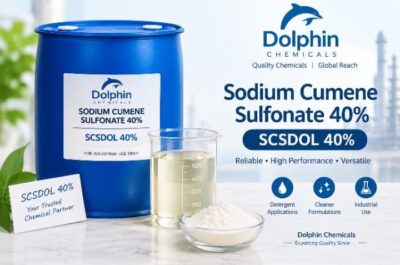
SCSDOL - 40% by Dolphin Chemicals
Understanding of Sodium Cumene Sulfonate 40% COA
A Certificate of Analysis often called a COA is a documents that shows the test results for a batch of product. It is a document for buyers because it tells them about the quality of the batch that is being sent. The Sodium Cumene Sulfonate 40% COA might have details like the product name, the batch number, the date it was made the test parameters, the test results and the limits for the specifications. The exact information can be different for each supplier. You should compare the Sodium Cumene Sulfonate 40% COA with the product specification that you and the supplier agreed on. The batch number on the COA should also match the batch number on the product box. This makes sure the document belongs to the material that is being sent. Keep the COA with your purchase records for use.
A COA should not be thought of as a data sheet. A COA usually shows the test results for a batch while a technical data sheet gives information about the product. Both documents have a role. They can help when you are choosing a supplier. The COA helps you check the quality of the batch that is sent. The technical data sheet helps you understand the product and its usual standards. You should read both papers before you agree to a supplier. If anything is not clear it is better to ask the supplier before you finalize the order. This can avoid confusion about product quality. How it is supplied.
Key Parameters to Check in the COA
The things you need to check will depend on your work and your company’s quality rules. For Sodium Cumene Sulfonate 40% you might look at the concentration. How it looks, the pH, the density and other important quality numbers. Compare each result with the limits that are written in the document. Also check the units that are used for each parameter because different suppliers might show information in ways. The batch number and the product name should match the sample or the shipment. Look at the test date and other basic details. If you have a set quality standard ask the supplier to make sure the product meets it.
The Sodium Cumene Sulfonate 40% COA should be looked at as part of the quality check not as a paper. For example if you have approved a sample based on limits the batch COA should be compared to those limits. Any big change, from the approved standard should be talked about before the material is used. You might also ask if the test method the supplier used is right for the parameter. This is important when you and the supplier use lab methods. Clear records make future orders easier to handle. For purchases you can make a COA checklist so that every shipment is checked the way.
Sodium Cumene Sulfonate 40% Technical Data Sheet Process
The Sodium Cumene Sulfonate 40% Technical data sheet the process of checking whether a product and supplier meet the buyer’s requirements. Technical qualification usually begins by gathering product information from the supplier. The buyer may request a data sheet, COA, safety information, product specification, sample and other required documents. The technical team then reviews these documents. Technical qualification checks whether the product is suitable for the intended use. If the documents are acceptable a sample can be tested in the laboratory. Depending on the application the buyer may also carry out a production trial. The results are then reviewed by the quality team before the supplier receives approval. Technical qualification helps buyers make a decision based on product information.
The Sodium Cumene Sulfonate 40% Technical data sheet is useful during this stage because it gives information about the product’s properties, uses, handling and storage. Sodium cumene sulfonate 40% buyers should compare the information in the document with their requirements. The technical team may also review the product’s appearance, concentration, pH, density and other values that are important for the formulation. If the product passes the required tests the supplier can move to the approval stage. If the product does not meet the requirements the buyer can ask for a revised specification. Consider another supplier. A clear qualification process helps avoid decisions based on price.
Technical qualification does not always need to be complicated. For buyers a simple step‑by‑step process is enough. First collect the documents. Second review the product specification. Third test the sample. Fourth conduct a formulation or production trial if needed. Fifth review the test results. The level of testing should depend on how the chemical will be used and how important it's to the product. A company, with quality requirements may need testing than a buyer using the chemical in a sensitive application.
Documents Required for Supplier Qualification
Before a buyer can approve a supplier the buyer should ask the supplier for the documents that the buyer’s company needs. The exact list can change depending on the buyer’s industry and country. A product technical data sheet is usually one of the documents the buyer should ask for. A safety data sheet may also be needed to learn about how to handle, store and what hazards exist and what to do in an emergency. A sample and its Certificate of Analysis (COA) can help the technical team test the product. The buyer may also ask for company information, manufacturing details, quality certificates and export documents as required. The supplier should be able to explain which documents are available for the product.
The Sodium Cumene Sulfonate 40 % Technical data sheet should be reviewed because the Sodium Cumene Sulfonate 40 % Technical data sheet contains important details, about the product. The buyer must check that the product name and the concentration level are clearly written and that the product details match the sample and the COA. The safety data sheet also needs to be reviewed by the team before the team works with the material. For orders more documents might be required by the country where the product is going or by the buyer’s company rules. It is best to obtain the list of documents before ordering. Obtaining the list of documents gives the supplier time to get the papers and can help prevent delays.
How to Compare Sodium Cumene Sulfoante 40% Technical data sheet, the Sample, COA
The sample, COA and Sodium Cumene Sulfonate 40 % Technical data sheet must match each other. The technical specification says what the product should normally be like. The sample lets the buyer test the material. The COA shows the test results for a batch. When these three things are looked at together the buyer gets an idea of the product’s quality. For example the buyer can look at the specification test the sample and finally check the sample results against the COA. If all three are the same the product's more likely to meet the needed standard. If there is a difference the buyer should look into it before saying yes.
The Sodium Cumene Sulfonate 40 % COA should be checked against the approved specification while the sample should be checked against both the specification and the COA. This way problems can be found before a bigger order is made. The buyer should also make sure the sample batch number and the Sodium Cumene Sulfonate 40 % COA batch number are the same where it matters. Records of the approved sample and test results should be kept for later. When the first big shipment comes the quality team can check it against the approved specification and the sample. This builds a quality control system for orders. It can also make it easier to track how the supplier is doing over time.
How to Approve a Sodium Cumene Sulfonate 40 % Supplier
Supplier approval should be based on both the product quality and the supplier’s ability to meet business needs. A supplier may have the product. May not be able to supply the needed amount or meet the delivery schedule. The buyer should therefore check production or supply capacity lead time packaging options order quantity and export experience. Communication is also important. The supplier should answer questions clearly. The supplier should provide the needed papers on time. Price is another factor to think about. Price should not be the reason for approval. A supplier that gives quality may be better for long‑term business.
During supplier approval the buyer can use a checklist. The checklist can have product specification, sample approval, COA review, technical documents, safety documents, packaging, supply capacity, delivery time, price and payment terms. The buyer can mark each part as approved, pending or not approved. This makes the decision easier to explain and record. If the supplier meets all the needs the buyer can add the supplier to the approved vendor list. If some parts are still not done the supplier can be given a list of things to do before approval. This way is useful, for companies.
Common Questions about Sodium Cumene Sulfonate 40 % COA, Sample and Technical Qualification
Buyers often ask questions when they start getting Sodium Cumene Sulfonate 40% from a supplier. Some buyers want to know which documents to ask for first while others want to learn how to compare a sample with the suppliers quality report. There is no one qualification process for every company because the needs depend on the use and the companys own quality rules. However the main way is usually the same: understand the product ask for the papers test the sample compare the results. Then say yes to the supplier. Doing these steps before a big order can help reduce quality problems.
It is also important to have communication during the qualification process. Buyers should share their needed specification with the supplier than asking for the product. This helps the supplier know what the buyer needs. If the buyer has needs for concentration, packaging, testing or papers these should be talked about before the order. A clear process at the start can save time later. It makes future orders easier.
Conclusion
Buying Sodium cumene sulfoante 40%, buyer should request for price, MOQ, samples. Buyer should check before placing order - product concentration, active content, available form, Sodium Cumene Sulfonate 40% COA, Sodium Cumene Sulfonate 40% Technical data sheet, price, shipping terms, packaging types available. Sodium Cumene Sulfonate 40% is used in cleaning products and other formulations so buyers need to make sure that the product matches their required quality and use. A sample, Certificate of Analysis (COA) and technical data sheet can help buyers check the product before approval. The Sodium Cumene Sulfonate 40% COA gives batch test results while the Sodium Cumene Sulfonate 40% Technical data sheet gives product information and specifications. By checking these documents along with the sample buyers can make a decision. Reduce the risk of problems during production.
Dolphin Pharmaceutical/ Dolphin Chemicals India Pvt Ltd is best choice to get complete guidance of what is COA, Technical data sheet, how to place order, where to place order, can I request for sample, how to get pricing. Dolphin Pharmaceutical/ Dolphin Chemicals India Pvt Ltd is trusted leading supplier of Sodium Cumene Sulfonate 40% under brand name is SCSDOL 40%. For more information contact our expert team.