


Sodium Cumene Sulfonate 40% is a material used in many cleaning and industrial formulations. Sodium Cumene Sulfonate 40% helps ingredients mix and stay dissolved in water-based products. When people work with Sodium Cumene Sulfonate 40% manufacturers look at the cloud point, viscosity and phase stability. These properties can influence how the product is processed, how it is stored and the overall quality of the product. The sodium cumene sulfonate 40% cloud point is useful for understanding how the material responds to temperature and changes in appearance. At the time the use of SCS 40% liquid can cover different products such as liquid detergents, cleaners and other water-based formulations. Knowing these properties can help manufacturers select and use the material in the right way.
What Is Sodium Cumene Sulfonate 40%?
Sodium Cumene Sulfonate, commonly called SCS is a water- chemical used as a hydrotrope in many liquid formulations. A hydrotrope helps improve the solubility of ingredients and can help keep a formulation mixed. The 40% grade is supplied as a liquid. Is easy to add during the manufacturing process. It is commonly considered when a formula contains surfactants, solvents, salts or other ingredients that may not remain mixed easily. SCS does not normally work as the cleaning agent. Instead it supports the formulation. Helps other ingredients work together. This makes it useful in a range of cleaning and industrial products.
SCS 40% is valued in formulations because it can help maintain a uniform system. In a formulation different ingredients may dissolve easily in water. However as more ingredients are added the formula can become harder to keep clear and stable. This is where a hydrotrope such as SCS can be useful. It can help improve the solubility of selected ingredients and support a consistent liquid product. The amount needed depends on the formula so manufacturers should carry out laboratory trials before deciding on the use level.
The quality of the supplied SCS 40% is also important. Manufacturers normally check the product against a specification before using it in production. Common checks may include appearance, active content, viscosity and other agreed quality parameters. A consistent raw material can help reduce changes between production batches. If the raw material changes from one batch to another the final formulation may also show changes in appearance, flow or stability. For this reason working with a supplier that provides product specifications and batch information is useful.
Another important point is that the properties of the material and the final formulation are not always the same. SCS 40% may have one viscosity and appearance when supplied. Its behavior can change after it is mixed with water and other ingredients. Surfactants, salts, solvents, fragrance, preservatives and other materials can change the properties. Therefore manufacturers should test the formulation rather than depending only on the properties of the individual raw material.
Understanding the Cloud Point of SCS 40%
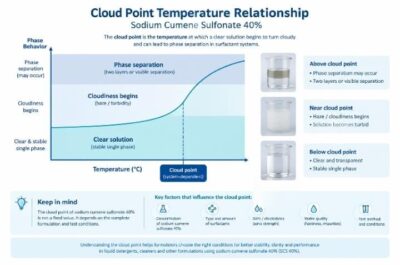
Cloud point is a term used to describe a temperature at which a liquid system starts to become cloudy under a test method. A clear liquid may become hazy when its temperature changes. This change can be important for products where a clear and uniform appearance is expected. Cloud point testing gives manufacturers a way to study how a material or formulation reacts to temperature. The test conditions should always be recorded because the result can depend on the method, concentration and other conditions used during testing.
The sodium cumene sulfonate 40% cloud point can be considered when studying the behavior of SCS-based formulations. A change in clarity may occur because temperature affects the way water and other ingredients interact. However cloudiness should not automatically be treated as product failure. Some products may remain suitable even if their appearance changes under conditions. Other products, clear household or industrial cleaners may require a specific appearance during their expected storage and use period.
The test result can also help during product development. If a formulation becomes cloudy at a temperature that is likely to occur during transport or storage the manufacturer may need to review the formulation. This can involve checking the concentration of SCS, surfactants, salts, solvents or other ingredients. The formulation may then be. Tested again. This process helps the manufacturer understand the limits of the product before moving to large-scale production.
Cloud point should also be studied at the concentration used in the final product. A raw material at one concentration may behave differently after dilution or after being mixed with components. Water quality can also have an effect. For this reason testing under controlled and repeatable conditions is important. The test temperature, sample concentration, equipment and method should be kept consistent when comparing results.
For manufacturers cloud point can be one part of a quality check. It should be considered along with appearance, viscosity, phase stability and other relevant product properties. Looking at these properties together gives a picture of how the formulation may behave. A single test result does not always explain the performance of a liquid product.
What Causes Changes in Cloud Point?
Temperature is one of the factors that can affect cloud point. When temperature changes the interaction between water and dissolved ingredients can also change. Some formulations stay clear over a range of temperatures. Others may turn cloudy after heating or cooling. This is why manufacturers should think about the temperature conditions the product will experience during storage and transport.
Concentration is another factor. Changing the amount of SCS or another ingredient can shift the balance of the formulation. A product might stay clear at one concentration. It could become cloudy at another. This often happens when the concentration of surfactants, salts, solvents or other ingredients changes. When looking into a change in cloud point it is helpful to compare the formulation not just one ingredient.
Water quality can also have an effect. Process water may contain minerals and dissolved salts that can change how a formulation behaves. If the water source changes the final product may not act the way. Using the water quality during production and lab testing can help avoid unexpected changes.
Surfactants are another part of the system. SCS is often used with surfactants. This combination can impact clarity. A change in the type or amount of surfactant may change how the formulation reacts to temperature. The same can happen with solvents, fragrance materials and salts. For this reason formulation trials should include all ingredients that will be in the product.
Mixing order can also affect the result. If ingredients are added fast or, in the wrong order the mixture may not blend evenly. This can cause cloudiness or pockets with concentrations of certain ingredients. A proper mixing process can help make a batch. Manufacturers should choose a mixing method based on their formula and equipment.
Storage conditions are also important. A formulation may stay clear at room temperature. Become cloudy after being stored in a cold place. It might return to its look after warming but this should be tested. Temperature cycling can be useful if the product is expected to go through repeated warm conditions.
Viscosity of Sodium Cumene Sulfonate 40%
Viscosity describes how easily a liquid flows. A low-viscosity liquid flows easily while a higher-viscosity liquid flows slowly. For SCS 40% viscosity matters because it can affect pumping, mixing, transfer and filling. If the material becomes too thick under conditions it may take more effort to move it through pipes or equipment. This can affect production speed and handling.
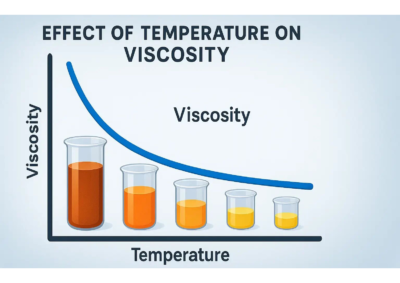
The viscosity of SCS 40% is influenced by temperature and concentration. A colder material may become thicker while a warmer material may flow easily. Because of this viscosity testing should be carried out at a controlled temperature. When comparing two batches both samples should be tested under the conditions. Otherwise a temperature difference may appear to be a batch difference.
Concentration can also change viscosity. If SCS is diluted with water the flow behavior will change. The addition of ingredients can also increase or decrease the viscosity of the final product. This means that the viscosity of the supplied material should not be used as the expected viscosity of the finished formulation. The complete formula needs to be tested.
Viscosity is also useful for quality control. If a new batch has a difference in viscosity compared with previous batches the manufacturer may investigate the cause. Possible reasons can include concentration, temperature, water quality, mixing or a change in another material. Viscosity does not identify the cause by itself but it can show that a further check may be needed.
A repeatable viscosity test is important. The manufacturer should use the instrument and test conditions when comparing samples. Details such as test temperature, equipment setting and sample condition should be recorded. This makes the results easier to compare over time. Helps create a useful quality record.
Effect of Temperature on SCS Viscosity
Temperature can have an effect on liquid flow. In liquid systems viscosity decreases as temperature increases. When the temperature drops the liquid may become thicker. This is why a sample stored in a warehouse may look and flow differently from a sample tested at room temperature.
The relationship between sodium cumene sulfonate 40% cloud point and viscosity is worth considering during temperature testing. A change in temperature may affect the appearance and flow of the material at the time. A cold sample may show a change in clarity while also becoming thicker. These changes should be measured under controlled conditions to understand what is actually happening.
For production plants temperature can affect handling. A material that becomes more viscous, at temperature may require more pumping force or longer transfer time. If the supplier gives a recommended handling temperature manufacturers should follow that guidance. Heating should not be applied without checking the product information and safety requirements.
Temperature testing helps plan how to move and keep materials safe. Materials might face temperatures while being moved or kept. A study on how stable something's can show if it still works after being in those temperatures. The same kind of study can be done on the mix.
When checking how thick a liquid is at temperatures the temperature must be written down. This helps see if a change is because of the material or just the temperature. Testing the way is really important when looking at different batches from different times.
Effect of Temperature on Viscosity
What is Phase Stability of Sodium Cumene Sulfonate 40%?
Phase stability means a liquid stays the same when kept. A good product should not form layers, dirt or split into parts during the time it is kept. This is important because splitting can change how it looks and how it works.
SCS 40% can help make liquid mixes. How well the final product works depends on all the things put into it. A mix may have things like soap, water, salt, smell, preservatives and more. If these things do not work well together the mix may look cloudy or split. So the final mix needs to be checked for splitting.
The cloud point of SCS 40% can be checked during a study especially when temperature is part of the test. A sample may get cloudy without splitting. This is important. People making the product should check if the sample has layers, dirt, changes in thickness or other signs of not being stable.
A simple study can involve keeping samples at temperatures for a time. The samples can then be checked regularly. Things like how it looks if it is clear color, smell, thickness and splitting can be noted. The exact test conditions should be picked based on how the product's stored and moved.
Temperature changes can also give info. A sample may be cooled then put to normal. Then it can be checked for changes. This kind of test can show if changes from temperature are gone or stay.
What Factors Influence Phase Stability?
What is in the mix has an effect on phase stability. Changing any part can change how it all works. Soap, water, salt, smell and water can all change how the mix acts. A mix that works at one level may not work after a change in what is used.
Temperature is also key. Heating and cooling can change how things mix. This can make it cloudy or split. Products that face temperature changes while kept should be tested in the conditions before making.
Mixing matters. If things are not mixed well some parts may have more of something and others less. This can cause parts that act differently. May make the mix not stable. Good mixing makes an even product and can help make samples more alike.
Water used should be considered. Things in the water can change some mixes. Using the water during making and making the product can help keep it the same. If the water changes more tests may be needed.
Containers can also change how the product stays. The container should fit the product. The way it is kept. The container should stay closed to avoid things getting in. Areas where the product is kept should also protect it from conditions not wanted.
Cloud Point vs. Viscosity vs. Phase Stability
Cloud point, thickness and phase stability measure things. Cloud point is about how it looks under a temperature. Thickness is about how it flows. Phase stability is about if the product stays mixed while kept. Testing all three can help makers understand the SCS mix better.
The cloud point of SCS 40% can show how the material or mix reacts to temperature. Thickness can show if it gets thicker or thinner. Phase stability can show if the product stays mixed over time. When these results are looked at together makers can understand the mix better.
For example a product may stay clear. Get thicker in cold. Another product may keep the thickness but get cloudy. A third product may get layers after kept. These are different. May need different mix or process changes.
For cleaning liquids how it looks is important for customers. They may expect it to look the same during its time on the shelf. At the time it should still be easy to pour and use. This makes thickness and stability important to check along with how it looks.
How to Store and Keep the Product Stable
Keeping SCS 40% properly is important to keep it good. Containers should stay closed when not in use. Kept where it is safe. Extreme temperatures should be avoided unless allowed by the product rules.
Controlling temperature can help stop changes in thickness and look. A cold place may make it thicker while hot may change how it works. Makers should follow the storage condition given for the product.
Checking regularly can be part of a study. Samples can be looked at for how it looks, color, clarity, thickness and splitting at set times. Comparing these to the sample can show if the product is changing while kept.
The cloud point of SCS 40% should always be written with the test conditions when used for checking quality. A number without the temperature and method may not help compare results from tests. The same should be done for thickness checks.
Good records can help makers notice changes early. If a batch changes in a way not expected the maker can check if it was from temperature how much was used, containers, things getting in or reasons. This can help stop the problem from happening again.
Where to Use SCS 40% in Mixes
The use of SCS 40% liquid is mainly for mixes where things dissolve and stay liquid. SCS can be used as a helper in cleaning products and other water-based mixes. It can help some parts stay dissolved and make the mix even. The exact amount used depends on what's being made.
Liquid soaps are one place where SCS can be used. These products often have soaps and other parts. Keeping the mix even is important for how it looks and how it works. SCS may be used in the mix when better dissolving is needed.
Another use of SCS 40% liquid can be in dishes washing products. These mixes may have soaps, salt, smell and more. SCS can be looked at as part of the mix to help parts work well together and stay liquid. Testing in the lab is still needed to find the amount for each mix.
Cleaners for surfaces and industrial cleaning products can also use SCS as part of the mix. These products may have parts that need to stay mixed in water. SCS can be considered when making a liquid mix. The final product should be tested for thickness, stability and other needed traits.
Where SCS 40% liquid is used can change based on the mix and other parts used. There is no one amount that works for all products. Makers should try amounts and see which gives the right result.
During making the mix the use of SCS 40% liquid should be checked with the mix not as a single part. How SCS works with soaps, water, salt, smell and other parts can change the end result. Testing the mix can help find if there is cloudiness changes in thickness or splitting.
Conclusion
Sodium Cumene Sulfonate 40% is a material for liquid formulas when solubility, flow and stability matter. Cloud point, viscosity and phase stability are three features to understand how the material and the final formula behave. The sodium cumene sulfonate 40% cloud point can show changes in appearance related to temperature. Viscosity shows how the liquid flows. Phase stability shows if the formula stays the same when stored. The sodium cumene sulfonate 40% cloud point should be measured using an repeatable method. The test temperature, concentration and other conditions should be written down so the results can be compared. A change in cloudiness does not always mean the product is bad. It should be looked at with signs of stability.
The use of SCS 40% liquid can be part of water-based cleaning formulas. However the right amount should be found through testing. Different products have surfactants, solvents, salts, fragrances and other parts. So the same amount of SCS may not work the same in every formula.
For manufacturers checking the material before using it and testing the whole formula are both important. Appearance, viscosity, cloud point and phase stability can be watched during development and storage. These checks can help spot changes and keep production steady.
Dolphin Pharmaceutical / Dolphin Chemicals India Pvt. Ltd. is manufacturer of Sodium Cumene Sulfonate SCSDOL 40%, based in India. Contact our expert team to get information like product details, technical data, certificate of analysis, storage instructions and how to use the material. This helps make sure the material fits the needs of the formula.